

Clarkson Potter/Ten Speed
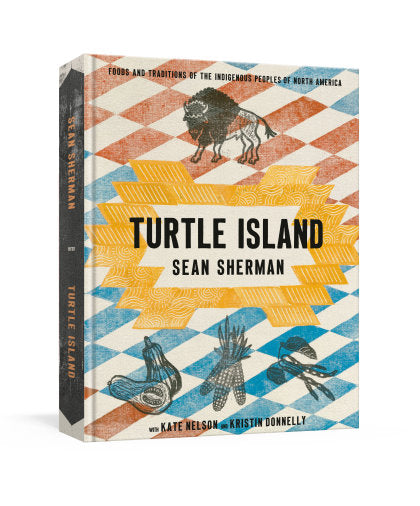
Turtle Island
Turtle Island
Couldn't load pickup availability
Collapsible content
ABOUT
“I’ve been completely seduced by Sean Sherman’s new book. This is so much more than enticing recipes and gorgeous photos.”—Robin Wall Kimmerer, #1 New York Times bestselling author of Braiding Sweetgrass and The Serviceberry
“A collection of the stories that tell deeper truths about our country and the people who have always been here.”—José Andrés, chef and founder of World Central Kitchen
A BEST COOKBOOK OF THE YEAR: THE NEW YORK TIMES, THE WASHINGTON POST, SMITHSONIAN MAGAZINE, LIBRARY JOURNAL
Growing up on South Dakota’s Pine Ridge Reservation, Oglala Lakota chef Sean Sherman understood that his people’s food was rich in flavor, heritage, and connection to the land. It was in the midst of a successful restaurant career mainly cooking European cuisines that he realized the lack of understanding about Native American foodways—a revelation that sent him on a journey to learn more about how Indigenous communities have preserved and evolved their cuisines through the centuries. Now a leading figure in the Indigenous food movement, he shares in Turtle Island the unique and diverse Native foodways of North America through both traditional and modern recipes made with ingredients that have nourished Indigenous peoples physically, spiritually, and culturally for generations.
Organized by region, this book delves into the rich culinary landscapes of Turtle Island—as many Indigenous cultures call this continent. Learn to eat with the seasons, consume meat and fish nose-to-tail, focus on plant-forward dishes, and discover how to better feed yourself. Alongside delicious recipes like Smoked Bison Ribeye, Wild-Rice Crusted Walleye Cakes, Charred Rainbow Trout with Grilled Ramps, Sweet Potato Soup with Dried Venison and Chile Oil, Sunflower Seed “Risotto,” and Sweet Corn Pudding with Woodland Berry Sauce (and so much more), you’ll see the inspiring Indigenous food scene through Sean’s eyes.
Exemplifying how Native foodways can teach us all to connect with the natural world around us, Turtle Island features rich narrative histories and spotlights the communities producing, gathering, and cooking these foods, including remarkable stories of ingenuity and adaptation that capture the resilience of Indigenous communities.
STANDARD, PRIMARY, DM AND VARIANT COVERS
Standard and Primary covers are widely available through general retailers. They often have higher print runs and can be cheaper, especially during sales.
In contrast, Direct Market (DM) and variant covers are primarily sold in comic shops. DM editions tend to have more limited availability and may be more valuable to collectors.
The main differences lie in artwork style, availability, price, and collector appeal. Ultimately, the choice between standard and variant covers depends on personal preference, budget, and individual collecting goals.
PRODUCT TYPES
Comic book enthusiasts have various formats to choose from when collecting their favorite stories.
Here's a brief overview of the main types:
Omnibus
- Large, hardcover collections
- Usually contain complete runs or extensive story arcs
- Typically 800-1000+ pages
- Higher price point, often €100-€150
Oversized Hardcover (OHC)
- Similar dimensions to omnibus, but thinner
- Collect shorter runs or story arcs
- Usually 300-600 pages
- Priced between €30-€50
Hardcover (HC)
- Standard-sized hardcover books
- Collect 6-12 issues typically
- Similar dimensions to single issues, but with a hard cover
- Priced around €25-€35
Trade Paperback (TP)
- Softcover collections
- Standard comic book size
- Usually collect 4-6 issues
- Most affordable option, typically €15-€25
Other Formats
- Absolute Editions: Oversized, deluxe hardcovers (mainly DC Comics)
- Compendiums: Massive paperback collections
- Graphic Novels (OGN/GN): Original stories not previously released as single issues
The choice between these formats often depends on personal preference, budget, and collecting goals. Omnibus and OHC editions offer larger artwork and more content but at a higher price, while TPs provide a more affordable way to collect complete story arcs