

Library of America
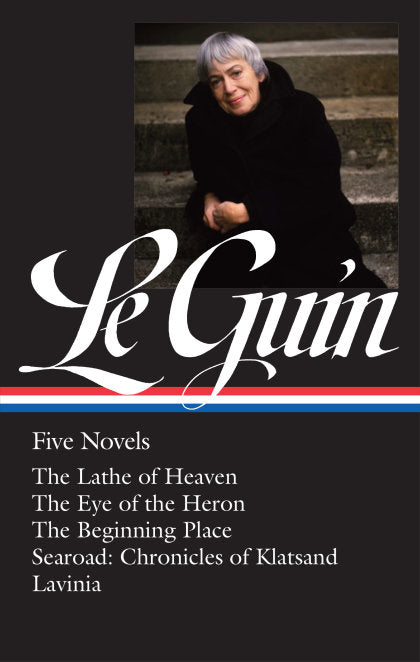
Ursula K. Le Guin: Five Novels (LOA #379)
Ursula K. Le Guin: Five Novels (LOA #379)
Couldn't load pickup availability
Collapsible content
ABOUT
Spans from the 1971 classic The Lathe of Heaven to her career-crowning 2008 masterpiece Lavinia
This 7th volume in the definitive Library of America edition of Ursula K. Le Guin’s works presents 5 remarkable standalone novels that showcase her boundless creativity and literary range.
In the Locus Award–winning The Lathe of Heaven (1971), one of Le Guin’s most admired works of science fiction, George Orr begins have effective dreams: dreams that change reality itself. But when he turns to the sleep researcher William Haber for help, the doctor sees an opportunity to use Orr’s strange gift for his own ends.
A former Terran prison colony on the planet Victoria seems destined for revolution in The Eye of the Heron (1978), when the authoritarian leaders in the City try to assert control over the peaceful farmers who have been sent to live around them.
The Beginning Place (1980) is a parable-like story in which Hugh and Irena have both found their way to the Beginning Place, a gateway to another world. The two initially become enemies, but must learn to work together when the utopia they’ve found turns out to have a shadow.
The long out-of-print Searoad: Chronicles of Klatsand (1991) is a Winesburg, Ohio-like series of linked stories set in a small vacation town on the Oregon coast, where some of the characters have come for a weekend and some for longer, but all are pilgrims in the grip of inexpressible longings.
And Le Guin’s final, powerfully feminist novel, Lavinia (2008), reimagines Virgil's Aeneid from the perspective of a woman who, in poet's telling, never speaks a word.
Special features include an appendix presenting three essays by Le Guin related to the novels, previously unseen hand-drawn maps by author herself, helpful annotation, and a chronology of Le Guin's life and career.
Brought together here for the first time, these 5 remarkable standalone novels showcase a Hugo and Nebula Award–winning master at her very best.
STANDARD, PRIMARY, DM AND VARIANT COVERS
Standard and Primary covers are widely available through general retailers. They often have higher print runs and can be cheaper, especially during sales.
In contrast, Direct Market (DM) and variant covers are primarily sold in comic shops. DM editions tend to have more limited availability and may be more valuable to collectors.
The main differences lie in artwork style, availability, price, and collector appeal. Ultimately, the choice between standard and variant covers depends on personal preference, budget, and individual collecting goals.
PRODUCT TYPES
Comic book enthusiasts have various formats to choose from when collecting their favorite stories.
Here's a brief overview of the main types:
Omnibus
- Large, hardcover collections
- Usually contain complete runs or extensive story arcs
- Typically 800-1000+ pages
- Higher price point, often €100-€150
Oversized Hardcover (OHC)
- Similar dimensions to omnibus, but thinner
- Collect shorter runs or story arcs
- Usually 300-600 pages
- Priced between €30-€50
Hardcover (HC)
- Standard-sized hardcover books
- Collect 6-12 issues typically
- Similar dimensions to single issues, but with a hard cover
- Priced around €25-€35
Trade Paperback (TP)
- Softcover collections
- Standard comic book size
- Usually collect 4-6 issues
- Most affordable option, typically €15-€25
Other Formats
- Absolute Editions: Oversized, deluxe hardcovers (mainly DC Comics)
- Compendiums: Massive paperback collections
- Graphic Novels (OGN/GN): Original stories not previously released as single issues
The choice between these formats often depends on personal preference, budget, and collecting goals. Omnibus and OHC editions offer larger artwork and more content but at a higher price, while TPs provide a more affordable way to collect complete story arcs