

Beacon Press
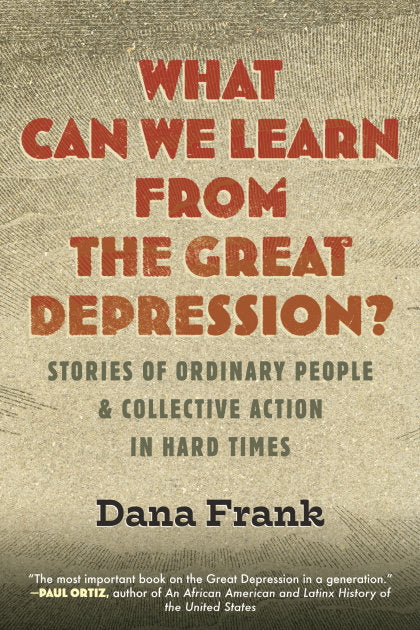
What Can We Learn from the Great Depression?
What Can We Learn from the Great Depression?
Couldn't load pickup availability
Collapsible content
ABOUT
Drawing on little-known stories of working people, What Can We Learn from the Great Depression? amplifies voices that have been long omitted from standard histories of the Depression era.
In four tales, Professor Dana Frank explores how ordinary working people in the US turned to collective action to meet the crisis of the Great Depression and what we can learn from them today. Readers are introduced to
- the 7 daring Black women who worked as wet nurses and staged a sit-down strike to demand better pay and an end to racial discrimination
- the groups who used mutual aid, cooperatives, eviction protests, and demands for government relief to meet their basic needs
- the million Mexican and Mexican American repatriados who were erased from mainstream historical memory, while (often fictitious) white “Dust Bowl migrants” became enshrined
- the Black Legion, a white supremacist fascist organization that saw racism, antisemitism, anti-Catholicism, and fascism as the cure to the Depression
While capitalism crashed during the Great Depression, racism did not and was, in fact, wielded by some to blame and oppress their neighbors. Patriarchy persisted, too, undermining the power of social movements and justifying women’s marginalization within them. For other ordinary people, collective action gave them the means to survive and fight against such hostilities.
What resulted were powerful new forms of horizontal reciprocity and solidarity that allowed people to provide each other with the bread, beans, and comradeship of daily life. The New Deal, when it arrived, provided vital resources to many, but others were cut off from its full benefits, especially if they were women or people of color.
What Can We Learn from the Great Depression? shows us how we might look to the past to think about how we can shape the future of our own failed economy. These lessons can also help us imagine and build movements to challenge such an economy—and to transform the state as a whole—in service to the common good without replicating racism and patriarchy.
STANDARD, PRIMARY, DM AND VARIANT COVERS
Standard and Primary covers are widely available through general retailers. They often have higher print runs and can be cheaper, especially during sales.
In contrast, Direct Market (DM) and variant covers are primarily sold in comic shops. DM editions tend to have more limited availability and may be more valuable to collectors.
The main differences lie in artwork style, availability, price, and collector appeal. Ultimately, the choice between standard and variant covers depends on personal preference, budget, and individual collecting goals.
PRODUCT TYPES
Comic book enthusiasts have various formats to choose from when collecting their favorite stories.
Here's a brief overview of the main types:
Omnibus
- Large, hardcover collections
- Usually contain complete runs or extensive story arcs
- Typically 800-1000+ pages
- Higher price point, often €100-€150
Oversized Hardcover (OHC)
- Similar dimensions to omnibus, but thinner
- Collect shorter runs or story arcs
- Usually 300-600 pages
- Priced between €30-€50
Hardcover (HC)
- Standard-sized hardcover books
- Collect 6-12 issues typically
- Similar dimensions to single issues, but with a hard cover
- Priced around €25-€35
Trade Paperback (TP)
- Softcover collections
- Standard comic book size
- Usually collect 4-6 issues
- Most affordable option, typically €15-€25
Other Formats
- Absolute Editions: Oversized, deluxe hardcovers (mainly DC Comics)
- Compendiums: Massive paperback collections
- Graphic Novels (OGN/GN): Original stories not previously released as single issues
The choice between these formats often depends on personal preference, budget, and collecting goals. Omnibus and OHC editions offer larger artwork and more content but at a higher price, while TPs provide a more affordable way to collect complete story arcs