

Penguin Young Readers Group
What Comes After
What Comes After
Couldn't load pickup availability
Collapsible content
ABOUT
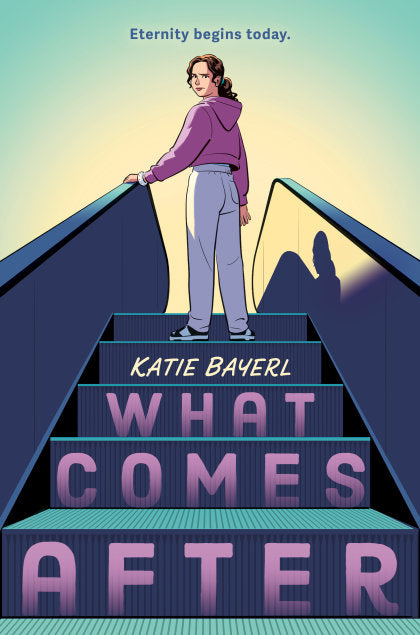
Mari never gave much thought to the afterlife before her untimely demise, but she certainly didn’t think it would be an experimental wellness enclave called Paradise Gate—a place where the newly dead go to sort out the unfinished business of their lives. She also didn’t think the biggest problem to plague her in life would follow her into the great beyond: her also recently deceased mother, Faye. Mari quickly realizes Faye is her unfinished business, and in order to move on to whatever’s next, she’ll have to find a way to forgive her dysfunctional mother for being no mother at all. But there’s so much to forgive: never holding down a steady job, never having a stable home, and abandoning Mari in the end.
It’s a lot to sort through, but faced with the possibility of being turned out into the abyss, Mari gets to work. She enrolls in the prescribed self- actualization classes (think: journaling, positive self-talk, and lots of Youga™). It all seems pretty hokey, but still, the assignments force Mari to confront difficult truths about her past.
When a shocking revelation about Mari’s death captures the attention of the afterlife media, Mari is suddenly in the spotlight, her messy history being judged by the whole realm. She finds escape in an equally troubled boy, who takes Mari to an obscure part of Paradise Gate and introduces her to rebels who show Mari that this “wellness center” is not all it pretends to be. With classmates disappearing and an afterlife revolution brewing, Mari must decide whether to play it safe or break the rules. At stake? Her eternal fate. Literally.
STANDARD, PRIMARY, DM AND VARIANT COVERS
Standard and Primary covers are widely available through general retailers. They often have higher print runs and can be cheaper, especially during sales.
In contrast, Direct Market (DM) and variant covers are primarily sold in comic shops. DM editions tend to have more limited availability and may be more valuable to collectors.
The main differences lie in artwork style, availability, price, and collector appeal. Ultimately, the choice between standard and variant covers depends on personal preference, budget, and individual collecting goals.
PRODUCT TYPES
Comic book enthusiasts have various formats to choose from when collecting their favorite stories.
Here's a brief overview of the main types:
Omnibus
- Large, hardcover collections
- Usually contain complete runs or extensive story arcs
- Typically 800-1000+ pages
- Higher price point, often €100-€150
Oversized Hardcover (OHC)
- Similar dimensions to omnibus, but thinner
- Collect shorter runs or story arcs
- Usually 300-600 pages
- Priced between €30-€50
Hardcover (HC)
- Standard-sized hardcover books
- Collect 6-12 issues typically
- Similar dimensions to single issues, but with a hard cover
- Priced around €25-€35
Trade Paperback (TP)
- Softcover collections
- Standard comic book size
- Usually collect 4-6 issues
- Most affordable option, typically €15-€25
Other Formats
- Absolute Editions: Oversized, deluxe hardcovers (mainly DC Comics)
- Compendiums: Massive paperback collections
- Graphic Novels (OGN/GN): Original stories not previously released as single issues
The choice between these formats often depends on personal preference, budget, and collecting goals. Omnibus and OHC editions offer larger artwork and more content but at a higher price, while TPs provide a more affordable way to collect complete story arcs