

Catapult
What I Made for Dinner
What I Made for Dinner
Couldn't load pickup availability
Collapsible content
ABOUT
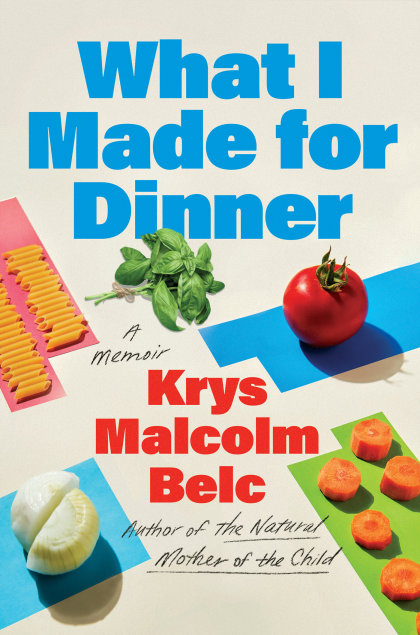
When the pandemic sends Krys Malcolm Belc and his young children home to live their lives on laptops, he turns to internet chefs for comfort and inspiration. It begins with Stella Parks and her 46 YouTube videos in which she teaches viewers how to make classic, nostalgic American treats like Cheez-Its, Klondike Bars, and Texas sheet cake. But the recipes aren’t enough—Belc needs to watch her showcase each ingredient, explain its importance, and weigh each item on a scale. His fixation on recipe videos, and the women who produce them, start to feel like the only thing that makes sense.
Most of life has been put on pause, but food is the one thing that continues to change day to day, season to season. Belc captures the joy and pleasure of cooking for a large family, as well as the mundane reality and occasional frustrations that come with simply getting food on the table. In the midst of it all, he feels a spark of inspiration to carry a second baby, a decision that forces him to confront how he has used both the internet and cooking to cope and distract.
Following a trans man whose life is largely structured by keeping the family household running, What I Made for Dinner asks the question we all might ask ourselves while elbow-deep in a roasting chicken: Is having the opportunity to cook meals for your family every day a blessing or a curse?
STANDARD, PRIMARY, DM AND VARIANT COVERS
Standard and Primary covers are widely available through general retailers. They often have higher print runs and can be cheaper, especially during sales.
In contrast, Direct Market (DM) and variant covers are primarily sold in comic shops. DM editions tend to have more limited availability and may be more valuable to collectors.
The main differences lie in artwork style, availability, price, and collector appeal. Ultimately, the choice between standard and variant covers depends on personal preference, budget, and individual collecting goals.
PRODUCT TYPES
Comic book enthusiasts have various formats to choose from when collecting their favorite stories.
Here's a brief overview of the main types:
Omnibus
- Large, hardcover collections
- Usually contain complete runs or extensive story arcs
- Typically 800-1000+ pages
- Higher price point, often €100-€150
Oversized Hardcover (OHC)
- Similar dimensions to omnibus, but thinner
- Collect shorter runs or story arcs
- Usually 300-600 pages
- Priced between €30-€50
Hardcover (HC)
- Standard-sized hardcover books
- Collect 6-12 issues typically
- Similar dimensions to single issues, but with a hard cover
- Priced around €25-€35
Trade Paperback (TP)
- Softcover collections
- Standard comic book size
- Usually collect 4-6 issues
- Most affordable option, typically €15-€25
Other Formats
- Absolute Editions: Oversized, deluxe hardcovers (mainly DC Comics)
- Compendiums: Massive paperback collections
- Graphic Novels (OGN/GN): Original stories not previously released as single issues
The choice between these formats often depends on personal preference, budget, and collecting goals. Omnibus and OHC editions offer larger artwork and more content but at a higher price, while TPs provide a more affordable way to collect complete story arcs