

Beacon Press
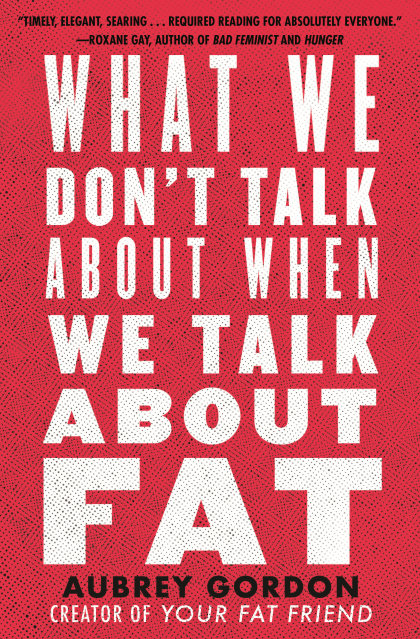
What We Don't Talk About When We Talk About Fat
What We Don't Talk About When We Talk About Fat
Couldn't load pickup availability
Collapsible content
ABOUT
Anti-fatness is everywhere. In What We Don’t Talk About When We Talk About Fat, Aubrey Gordon unearths the cultural attitudes and social systems that have led to people being denied basic needs because they are fat and calls for social justice movements to be inclusive of plus-sized people’s experiences. Unlike the recent wave of memoirs and quasi self-help books that encourage readers to love and accept themselves, Gordon pushes the discussion further towards authentic fat activism, which includes ending legal weight discrimination, giving equal access to health care for large people, increased access to public spaces, and ending anti-fat violence. As she argues, “I did not come to body positivity for self-esteem. I came to it for social justice.”
By sharing her experiences as well as those of others—from smaller fat to very fat people—she concludes that to be fat in our society is to be seen as an undeniable failure, unlovable, unforgivable, and morally condemnable. Fatness is an open invitation for others to express disgust, fear, and insidious concern. To be fat is to be denied humanity and empathy. Studies show that fat survivors of sexual assault are less likely to be believed and less likely than their thin counterparts to report various crimes; 27% of very fat women and 13% of very fat men attempt suicide; over 50% of doctors describe their fat patients as “awkward, unattractive, ugly and noncompliant”; and in 48 states, it’s legal—even routine—to deny employment because of an applicant’s size.
Advancing fat justice and changing prejudicial structures and attitudes will require work from all people. What We Don’t Talk About When We Talk About Fat is a crucial tool to create a tectonic shift in the way we see, talk about, and treat our bodies, fat and thin alike.
STANDARD, PRIMARY, DM AND VARIANT COVERS
Standard and Primary covers are widely available through general retailers. They often have higher print runs and can be cheaper, especially during sales.
In contrast, Direct Market (DM) and variant covers are primarily sold in comic shops. DM editions tend to have more limited availability and may be more valuable to collectors.
The main differences lie in artwork style, availability, price, and collector appeal. Ultimately, the choice between standard and variant covers depends on personal preference, budget, and individual collecting goals.
PRODUCT TYPES
Comic book enthusiasts have various formats to choose from when collecting their favorite stories.
Here's a brief overview of the main types:
Omnibus
- Large, hardcover collections
- Usually contain complete runs or extensive story arcs
- Typically 800-1000+ pages
- Higher price point, often €100-€150
Oversized Hardcover (OHC)
- Similar dimensions to omnibus, but thinner
- Collect shorter runs or story arcs
- Usually 300-600 pages
- Priced between €30-€50
Hardcover (HC)
- Standard-sized hardcover books
- Collect 6-12 issues typically
- Similar dimensions to single issues, but with a hard cover
- Priced around €25-€35
Trade Paperback (TP)
- Softcover collections
- Standard comic book size
- Usually collect 4-6 issues
- Most affordable option, typically €15-€25
Other Formats
- Absolute Editions: Oversized, deluxe hardcovers (mainly DC Comics)
- Compendiums: Massive paperback collections
- Graphic Novels (OGN/GN): Original stories not previously released as single issues
The choice between these formats often depends on personal preference, budget, and collecting goals. Omnibus and OHC editions offer larger artwork and more content but at a higher price, while TPs provide a more affordable way to collect complete story arcs