

Beacon Press
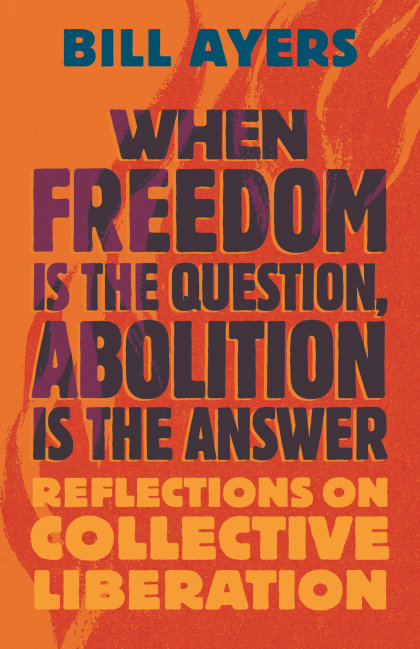
When Freedom Is the Question, Abolition Is the Answer
When Freedom Is the Question, Abolition Is the Answer
Couldn't load pickup availability
Collapsible content
ABOUT
Blending history and political theory and weaving in examples from literature, social movements, and his personal life, this book is a useful resource and primer for those interested in fighting for social justice. Guided by questions like what is freedom?, how do we get free?, and what are the freedom dreams that encourage us and drive us forward?, esteemed activist Bill Ayers explores the concept of freedom in eight essays:
- Freedom/Unfreedom takes off from the Black Freedom Movement in the 20th Century as a template for social justice movements that followed, and begins to illuminate the idea of freedom in light of what folks come together to oppose.
- Freedom’s Paradox offers examples of a contradiction (from Frederick Douglass to the French Resistance to the Panthers)—even, or especially, in the most dire circumstances, people testify to “being free” at the moment they identify and unite to oppose unfreedom.
- Social Freedom/Individual Liberty directly takes on the link between the individual and the social when freedom is the question.
- Freedom, Anarchism, and Socialism takes off from the idea that freedom without socialism is predation and exploitation, and that socialism without freedom is bondage and subjugation.
- Freedom, Truth, and Repair considers reparations as a necessary step in any honest attempt toward authentic reconciliation.
- Organizing Freedom is a primer on organizing, strategy, and tactics for freedom fighters.
- Teach Freedom considers what an education for free people entails.
- Freedom and Abolition connects an enriched understanding of what freedom entails with an embrace of abolitionist politics.
STANDARD, PRIMARY, DM AND VARIANT COVERS
Standard and Primary covers are widely available through general retailers. They often have higher print runs and can be cheaper, especially during sales.
In contrast, Direct Market (DM) and variant covers are primarily sold in comic shops. DM editions tend to have more limited availability and may be more valuable to collectors.
The main differences lie in artwork style, availability, price, and collector appeal. Ultimately, the choice between standard and variant covers depends on personal preference, budget, and individual collecting goals.
PRODUCT TYPES
Comic book enthusiasts have various formats to choose from when collecting their favorite stories.
Here's a brief overview of the main types:
Omnibus
- Large, hardcover collections
- Usually contain complete runs or extensive story arcs
- Typically 800-1000+ pages
- Higher price point, often €100-€150
Oversized Hardcover (OHC)
- Similar dimensions to omnibus, but thinner
- Collect shorter runs or story arcs
- Usually 300-600 pages
- Priced between €30-€50
Hardcover (HC)
- Standard-sized hardcover books
- Collect 6-12 issues typically
- Similar dimensions to single issues, but with a hard cover
- Priced around €25-€35
Trade Paperback (TP)
- Softcover collections
- Standard comic book size
- Usually collect 4-6 issues
- Most affordable option, typically €15-€25
Other Formats
- Absolute Editions: Oversized, deluxe hardcovers (mainly DC Comics)
- Compendiums: Massive paperback collections
- Graphic Novels (OGN/GN): Original stories not previously released as single issues
The choice between these formats often depends on personal preference, budget, and collecting goals. Omnibus and OHC editions offer larger artwork and more content but at a higher price, while TPs provide a more affordable way to collect complete story arcs