

Beacon Press
When One Religion Isn't Enough
When One Religion Isn't Enough
Couldn't load pickup availability
Collapsible content
ABOUT
Named a best book of 2018 by Library Journal
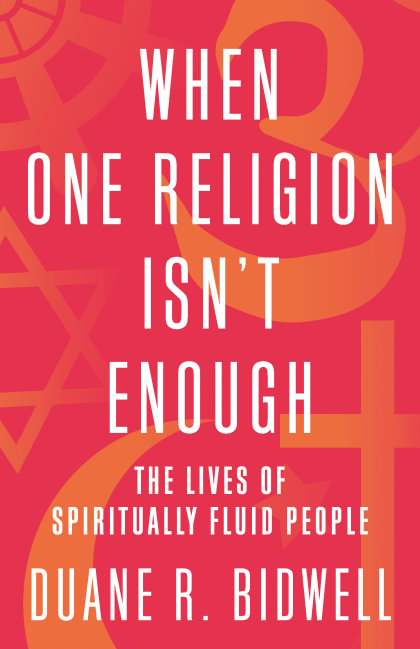
In the United States, we often assume religious and spiritual identity are pure, static, and singular. But some people regularly cross religious boundaries. These “spiritually fluid” people celebrate complex religious bonds, and in the process they blur social categories, evoke prejudice, and complicate religious communities. Their presence sparks questions: How and why do people become spiritually fluid? Are they just confused or unable to commit? How do we make sense of them?
When One Religion Isn’t Enough explores the lives of spiritually fluid people, revealing that while some chose multiple religious belonging, many more inherit it. For many North Americans, the complicated legacies of colonialism are part of their family story, and they may consider themselves both Christian and Hindu, or Buddhist, or Yoruban, or one of the many other religions native to colonized lands.
For some Asian Americans, singular religious identity may seem an alien concept, as many East Asian nations freely mix Buddhist, Confucian, Taoist, and other traditions. Some African American Christians are consciously seeking to reconnect with ancestral spiritualities. And still other people are born into religiously mixed families. Jewish-Christian intermarriage led the way in the US, but religious diversity here is only increasing: almost four in ten Americans (39 percent) who have married since 2010 have a spouse who is in a different religious group.
Through in-depth conversations with spiritually fluid people, renowned scholar Duane Bidwell explores how people come to claim and be claimed by multiple religious traditions, how spiritually fluid people engage radically opposed truth claims, and what this growing population tells us about change within our communities.
STANDARD, PRIMARY, DM AND VARIANT COVERS
Standard and Primary covers are widely available through general retailers. They often have higher print runs and can be cheaper, especially during sales.
In contrast, Direct Market (DM) and variant covers are primarily sold in comic shops. DM editions tend to have more limited availability and may be more valuable to collectors.
The main differences lie in artwork style, availability, price, and collector appeal. Ultimately, the choice between standard and variant covers depends on personal preference, budget, and individual collecting goals.
PRODUCT TYPES
Comic book enthusiasts have various formats to choose from when collecting their favorite stories.
Here's a brief overview of the main types:
Omnibus
- Large, hardcover collections
- Usually contain complete runs or extensive story arcs
- Typically 800-1000+ pages
- Higher price point, often €100-€150
Oversized Hardcover (OHC)
- Similar dimensions to omnibus, but thinner
- Collect shorter runs or story arcs
- Usually 300-600 pages
- Priced between €30-€50
Hardcover (HC)
- Standard-sized hardcover books
- Collect 6-12 issues typically
- Similar dimensions to single issues, but with a hard cover
- Priced around €25-€35
Trade Paperback (TP)
- Softcover collections
- Standard comic book size
- Usually collect 4-6 issues
- Most affordable option, typically €15-€25
Other Formats
- Absolute Editions: Oversized, deluxe hardcovers (mainly DC Comics)
- Compendiums: Massive paperback collections
- Graphic Novels (OGN/GN): Original stories not previously released as single issues
The choice between these formats often depends on personal preference, budget, and collecting goals. Omnibus and OHC editions offer larger artwork and more content but at a higher price, while TPs provide a more affordable way to collect complete story arcs