

Catapult
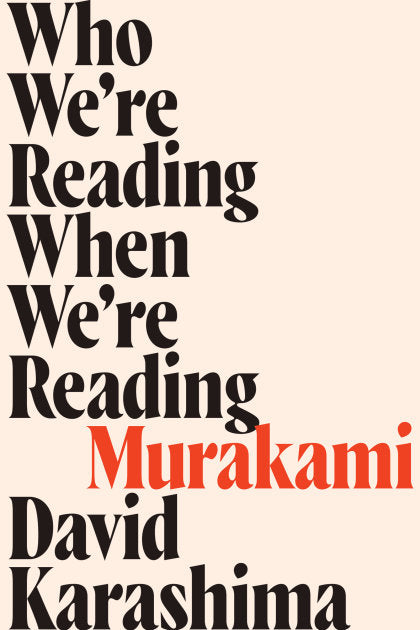
Who We're Reading When We're Reading Murakami
Who We're Reading When We're Reading Murakami
Couldn't load pickup availability
Collapsible content
ABOUT
Thirty years ago, when Haruki Murakami’s works were first being translated, they were part of a series of pocket-size English-learning guides released only in Japan. Today his books can be read in fifty languages and have won prizes and sold millions of copies globally. How did a loner destined for a niche domestic audience become one of the most famous writers alive? This book tells one key part of the story. Its cast includes an expat trained in art history who never intended to become a translator; a Chinese American ex-academic who never planned to work as an editor; and other publishing professionals in New York, London, and Tokyo who together introduced a pop-inflected, unexpected Japanese voice to the wider literary world.
David Karashima synthesizes research, correspondence, and interviews with dozens of individuals—including Murakami himself—to examine how countless behind-the-scenes choices over the course of many years worked to build an internationally celebrated author’s persona and oeuvre. His careful look inside the making of the “Murakami Industry" uncovers larger questions: What role do translators and editors play in framing their writers’ texts? What does it mean to translate and edit “for a market”? How does Japanese culture get packaged and exported for the West?
STANDARD, PRIMARY, DM AND VARIANT COVERS
Standard and Primary covers are widely available through general retailers. They often have higher print runs and can be cheaper, especially during sales.
In contrast, Direct Market (DM) and variant covers are primarily sold in comic shops. DM editions tend to have more limited availability and may be more valuable to collectors.
The main differences lie in artwork style, availability, price, and collector appeal. Ultimately, the choice between standard and variant covers depends on personal preference, budget, and individual collecting goals.
PRODUCT TYPES
Comic book enthusiasts have various formats to choose from when collecting their favorite stories.
Here's a brief overview of the main types:
Omnibus
- Large, hardcover collections
- Usually contain complete runs or extensive story arcs
- Typically 800-1000+ pages
- Higher price point, often €100-€150
Oversized Hardcover (OHC)
- Similar dimensions to omnibus, but thinner
- Collect shorter runs or story arcs
- Usually 300-600 pages
- Priced between €30-€50
Hardcover (HC)
- Standard-sized hardcover books
- Collect 6-12 issues typically
- Similar dimensions to single issues, but with a hard cover
- Priced around €25-€35
Trade Paperback (TP)
- Softcover collections
- Standard comic book size
- Usually collect 4-6 issues
- Most affordable option, typically €15-€25
Other Formats
- Absolute Editions: Oversized, deluxe hardcovers (mainly DC Comics)
- Compendiums: Massive paperback collections
- Graphic Novels (OGN/GN): Original stories not previously released as single issues
The choice between these formats often depends on personal preference, budget, and collecting goals. Omnibus and OHC editions offer larger artwork and more content but at a higher price, while TPs provide a more affordable way to collect complete story arcs