

Harmony/Rodale/Convergent
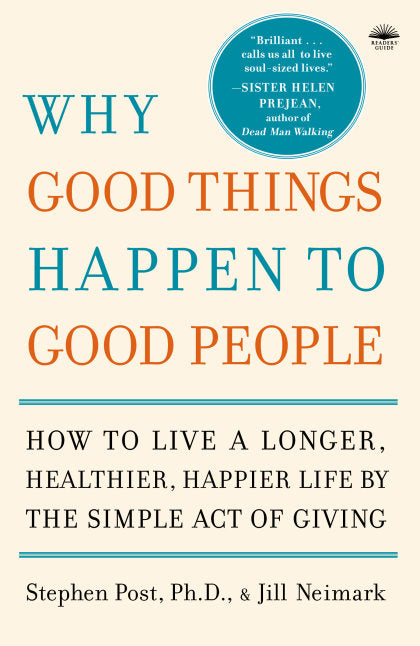
Why Good Things Happen to Good People
Why Good Things Happen to Good People
Couldn't load pickup availability
Collapsible content
ABOUT
Dr. Stephen Post has been making headlines by funding studies at the nation’s top universities to prove once and for all the life-enhancing benefits of caring, kindness, and compassion. The exciting new research shows that when we give of ourselves, especially if we start young, everything from life-satisfaction to self-realization and physical health is significantly affected. Mortality is delayed. Depression is reduced. Well-being and good fortune are increased. In their life-changing new book, Why Good Things Happen to Good People, Dr. Post and journalist Jill Neimark weave the growing new science of love and giving with profoundly moving real-life stories to show exactly how giving unlocks the doors to health, happiness, and a longer life.
The astounding new research includes a fifty-year study showing that people who are giving during their high school years have better physical and mental health throughout their lives. Other studies show that older people who give live longer than those who don’t. Helping others has been shown to bring health benefits to those with chronic illness, including HIV, multiple sclerosis, and heart problems. And studies show that people of all ages who help others on a regular basis, even in small ways, feel happiest.
Why Good Things Happen to Good People offers ten ways to give of yourself, in four areas of life, all proven by science to improve your health and even add to your life expectancy. (And not one requires you to write a check.) The one-of-a-kind “Love and Longevity Scale” scores you on all ten ways, from volunteering to listening, loyalty to forgiveness, celebration to standing up for what you believe in. Using the lessons and guidelines in each chapter, you can create a personalized plan for a more generous life, finding the style of giving that suits you best.
The astonishing connection between generosity and health is so convincing that it will inspire readers to change their lives in ways big and small. Get started today. A longer, healthier, happier life awaits you.
STANDARD, PRIMARY, DM AND VARIANT COVERS
Standard and Primary covers are widely available through general retailers. They often have higher print runs and can be cheaper, especially during sales.
In contrast, Direct Market (DM) and variant covers are primarily sold in comic shops. DM editions tend to have more limited availability and may be more valuable to collectors.
The main differences lie in artwork style, availability, price, and collector appeal. Ultimately, the choice between standard and variant covers depends on personal preference, budget, and individual collecting goals.
PRODUCT TYPES
Comic book enthusiasts have various formats to choose from when collecting their favorite stories.
Here's a brief overview of the main types:
Omnibus
- Large, hardcover collections
- Usually contain complete runs or extensive story arcs
- Typically 800-1000+ pages
- Higher price point, often €100-€150
Oversized Hardcover (OHC)
- Similar dimensions to omnibus, but thinner
- Collect shorter runs or story arcs
- Usually 300-600 pages
- Priced between €30-€50
Hardcover (HC)
- Standard-sized hardcover books
- Collect 6-12 issues typically
- Similar dimensions to single issues, but with a hard cover
- Priced around €25-€35
Trade Paperback (TP)
- Softcover collections
- Standard comic book size
- Usually collect 4-6 issues
- Most affordable option, typically €15-€25
Other Formats
- Absolute Editions: Oversized, deluxe hardcovers (mainly DC Comics)
- Compendiums: Massive paperback collections
- Graphic Novels (OGN/GN): Original stories not previously released as single issues
The choice between these formats often depends on personal preference, budget, and collecting goals. Omnibus and OHC editions offer larger artwork and more content but at a higher price, while TPs provide a more affordable way to collect complete story arcs