

Harmony/Rodale/Convergent
Why Should the Devil Have All the Good Music?
Why Should the Devil Have All the Good Music?
Couldn't load pickup availability
Collapsible content
ABOUT
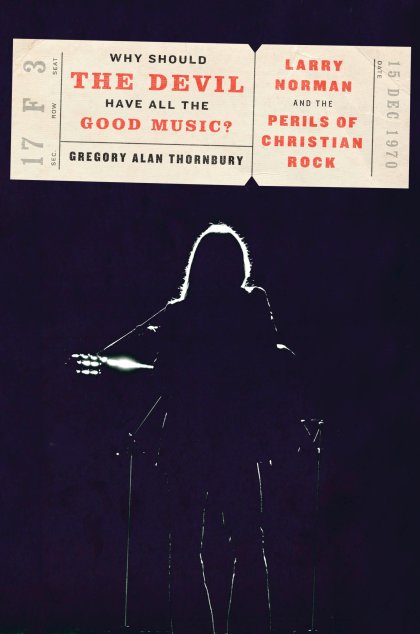
In 1969, in Capitol Records' Hollywood studio, a blonde-haired troubadour named Larry Norman laid track for an album that would launch a new genre of music and one of the strangest, most interesting careers in modern rock. Having spent the bulk of the 1960s playing on bills with acts like the Who, Janis Joplin, and the Doors, Norman decided that he wanted to sing about the most countercultural subject of all: Jesus.
Billboard called Norman “the most important songwriter since Paul Simon,” and his music would go on to inspire members of bands as diverse as U2, The Pixies, Guns ‘N Roses, and more. To a young generation of Christians who wanted a way to be different in the American cultural scene, Larry was a godsend—spinning songs about one’s eternal soul as deftly as he did ones critiquing consumerism, middle-class values, and the Vietnam War. To the religious establishment, however, he was a thorn in the side; and to secular music fans, he was an enigma, constantly offering up Jesus to problems they didn’t think were problems. Paul McCartney himself once told Larry, “You could be famous if you’d just drop the God stuff,” a statement that would foreshadow Norman’s ultimate demise.
In Why Should the Devil Have all the Good Music?, Gregory Alan Thornbury draws on unparalleled access to Norman’s personal papers and archives to narrate the conflicts that defined the singer’s life, as he crisscrossed the developing fault lines between Evangelicals and mainstream American culture—friction that continues to this day. What emerges is a twisting, engrossing story about ambition, art, friendship, betrayal, and the turns one’s life can take when you believe God is on your side.
STANDARD, PRIMARY, DM AND VARIANT COVERS
Standard and Primary covers are widely available through general retailers. They often have higher print runs and can be cheaper, especially during sales.
In contrast, Direct Market (DM) and variant covers are primarily sold in comic shops. DM editions tend to have more limited availability and may be more valuable to collectors.
The main differences lie in artwork style, availability, price, and collector appeal. Ultimately, the choice between standard and variant covers depends on personal preference, budget, and individual collecting goals.
PRODUCT TYPES
Comic book enthusiasts have various formats to choose from when collecting their favorite stories.
Here's a brief overview of the main types:
Omnibus
- Large, hardcover collections
- Usually contain complete runs or extensive story arcs
- Typically 800-1000+ pages
- Higher price point, often €100-€150
Oversized Hardcover (OHC)
- Similar dimensions to omnibus, but thinner
- Collect shorter runs or story arcs
- Usually 300-600 pages
- Priced between €30-€50
Hardcover (HC)
- Standard-sized hardcover books
- Collect 6-12 issues typically
- Similar dimensions to single issues, but with a hard cover
- Priced around €25-€35
Trade Paperback (TP)
- Softcover collections
- Standard comic book size
- Usually collect 4-6 issues
- Most affordable option, typically €15-€25
Other Formats
- Absolute Editions: Oversized, deluxe hardcovers (mainly DC Comics)
- Compendiums: Massive paperback collections
- Graphic Novels (OGN/GN): Original stories not previously released as single issues
The choice between these formats often depends on personal preference, budget, and collecting goals. Omnibus and OHC editions offer larger artwork and more content but at a higher price, while TPs provide a more affordable way to collect complete story arcs