

Random House Publishing Group
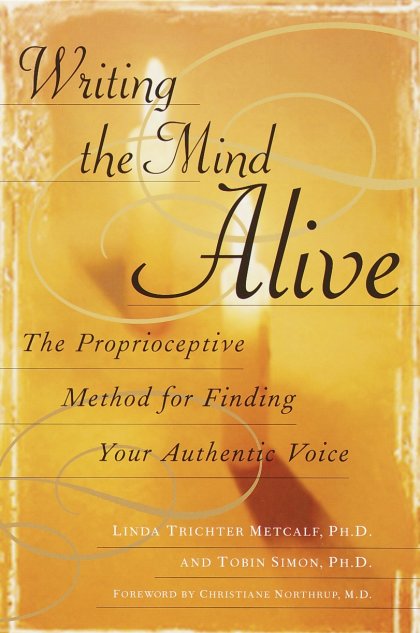
Writing the Mind Alive
Writing the Mind Alive
Couldn't load pickup availability
Collapsible content
ABOUT
In 1976, Linda Trichter Metcalf, then a university English professor, sat down with pen and paper and intuitively started a self-guided writing practice that helped to bring herself into focus and clarify her life as never before. She and a colleague, Tobin Simon, introduced this original method into their classrooms. They experienced such solid response from their students that, for the last twenty-five years, they have devoted themselves to teaching what has now become the respected practice of Proprioceptive Writing®–in workshops, secondary and elementary schools, and college psychology and writing classes around the country, among them the New School University.
“Proprioception” comes from the Latin proprius, meaning “one’s own,” and this writing method helps synthesize emotion and imagination, generating authentic insight and catharsis. Proprioceptive Writing® is not formal writing, nor is it automatic or stream-of-consciousness writing. Requiring a regular, disciplined practice in a quiet environment, the method uses several aids to deepen attention and free the writer within: Baroque music, a candle, a pad, and a pen. Presenting Proprioceptive Writing® in book form for the first time, Writing the Mind Alive shows how you, too, can use it to
• Focus awareness, dissolve inhibitions, and build self-trust
• Unburden your mind and resolve emotional conflicts
• Connect more deeply with your spiritual self
• Write and speak with strength and clarity
• Enhance the benefits of psychotherapy
• Awaken your senses and emotions
• Liberate your creative energies
Featuring actual “writes” by students of all ages, Writing the Mind Alive is a catalyst for mental and emotional aliveness that can truly enrich the rest of your life.
STANDARD, PRIMARY, DM AND VARIANT COVERS
Standard and Primary covers are widely available through general retailers. They often have higher print runs and can be cheaper, especially during sales.
In contrast, Direct Market (DM) and variant covers are primarily sold in comic shops. DM editions tend to have more limited availability and may be more valuable to collectors.
The main differences lie in artwork style, availability, price, and collector appeal. Ultimately, the choice between standard and variant covers depends on personal preference, budget, and individual collecting goals.
PRODUCT TYPES
Comic book enthusiasts have various formats to choose from when collecting their favorite stories.
Here's a brief overview of the main types:
Omnibus
- Large, hardcover collections
- Usually contain complete runs or extensive story arcs
- Typically 800-1000+ pages
- Higher price point, often €100-€150
Oversized Hardcover (OHC)
- Similar dimensions to omnibus, but thinner
- Collect shorter runs or story arcs
- Usually 300-600 pages
- Priced between €30-€50
Hardcover (HC)
- Standard-sized hardcover books
- Collect 6-12 issues typically
- Similar dimensions to single issues, but with a hard cover
- Priced around €25-€35
Trade Paperback (TP)
- Softcover collections
- Standard comic book size
- Usually collect 4-6 issues
- Most affordable option, typically €15-€25
Other Formats
- Absolute Editions: Oversized, deluxe hardcovers (mainly DC Comics)
- Compendiums: Massive paperback collections
- Graphic Novels (OGN/GN): Original stories not previously released as single issues
The choice between these formats often depends on personal preference, budget, and collecting goals. Omnibus and OHC editions offer larger artwork and more content but at a higher price, while TPs provide a more affordable way to collect complete story arcs